


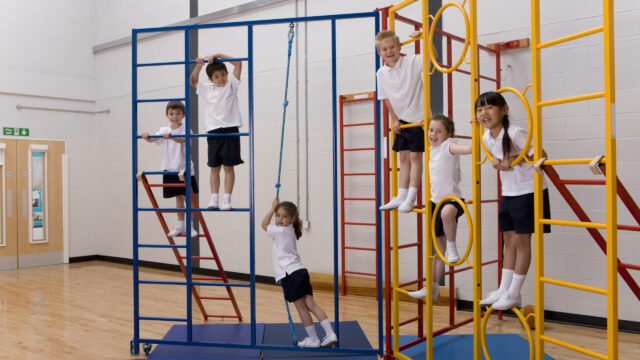
Gymnastics in primary schools plays a vital role in delivering a well-rounded physical education experience. As a core element of the PE curriculum, it provides children with the opportunity to develop essential physical skills while also encouraging creativity, confidence, and self-expression. From early years through to KS2, physical education gymnastics helps pupils build strength, balance, coordination, and control in a structured yet engaging way.
For many teachers, however, planning and delivering PE gymnastics lessons can feel daunting, especially without specialist training. The good news is that it doesn’t need to be complicated. With the right approach and a bank of practical gymnastics ideas, you can create fun, safe, and progressive lessons that suit all abilities.
This guide is designed to give you clear, usable ideas for teaching gymnastics across KS1 and KS2, alongside key principles and strategies to help you feel confident delivering high-quality primary school gymnastics lessons.
What is Gymnastics in Primary Schools?
In a primary school setting, PE gymnastics focuses on teaching pupils how to control their bodies through a range of movements and sequences. It is less about perfecting elite techniques and more about developing fundamental movement skills in a safe and structured environment.
According to the National Curriculum, physical education gymnastics involves mastering basic movements such as balance, agility, and coordination, as well as applying these skills individually and in combination. Core movement types include:
- Balance – where pupils learn to hold still positions on different body parts, improving stability and control.
- Rolling – which introduces body awareness and spatial understanding through movements like forward rolls and rocking.
- Jumping – helping develop power, coordination, and safe landing techniques.
- Travelling – where children move across space in controlled and creative ways.
These foundational elements form the building blocks of all primary school gymnastics lessons and can be adapted for both KS1 and KS2.
Why Teach Gymnastics in PE?
The benefits of physical education gymnastics go far beyond physical development. While it certainly helps children improve strength, flexibility, and coordination, it also supports a wide range of personal and cognitive skills.
Physically, gymnastics encourages pupils to develop body control and spatial awareness. These skills transfer into other sports and everyday activities, making gymnastics a key component of overall physical literacy. Emotionally, gymnastics can significantly boost confidence. As pupils master new movements and perform sequences, they gain a sense of achievement and self-belief. Creatively, it allows children to explore movement in their own way. Unlike some sports, there is no single “right” answer, which encourages individuality and imagination.
Creating sequences involves planning, memory, and evaluation, while performing routines can build communication skills and resilience. This shows the strong cross-curricular links that teaching gymnastics in PE has.
Key Principles for Teaching Primary School Gymnastics
Delivering effective gymnastics in primary schools starts with a few key principles, with safety always coming first. This means ensuring there is enough space between pupils, that equipment is used correctly, and that clear instructions are given before activities begin. Supervision is also essential at all times.
Progression is equally important. Start with simple movements and gradually build towards more complex skills and sequences. This helps pupils develop confidence and reduces the risk of injury.
Inclusion should underpin every lesson. Activities should be adaptable so that all pupils, regardless of ability, can participate and succeed. Clear demonstrations and modelling are also crucial. Showing pupils exactly what is expected, either yourself or through confident pupils, can make a huge difference in understanding and engagement.
Gymnastics Ideas for KS1
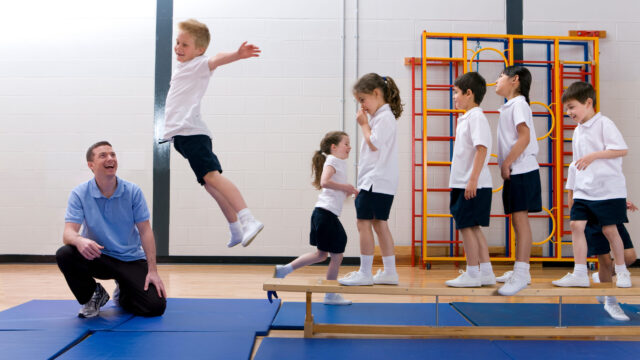
When it comes to KS1, gymnastics ideas should focus on developing fundamental movement skills in a fun and engaging way. At this stage, it’s all about exploration and building confidence. Here are some ideas to inspire gymnastics in KS1 children.
Simple Floor Work Activities
Start with basic shapes such as tuck, star, and straight. These help children understand body control and positioning. Next, introduce simple balances, encouraging pupils to hold positions for a few seconds. You can progress this by asking them to balance on different body parts or at different height levels. Rocking and rolling activities are also key, including forward rolls, log rolls, and rocking like a ball help develop coordination and body awareness.
Fun and Engaging Activities
Animal movements are always a hit in KS1 gymnastics activities. Ask pupils to move like bears, frogs, or snakes, which naturally incorporates strength and coordination. Copycat sequences are another effective approach. Demonstrate a short sequence and have pupils replicate it, gradually increasing complexity.
To encourage teamwork and focus, ask pupils to do partner mirroring. One pupil should performs movements while the other copies, promoting observation and control.
Gymnastics Ideas for KS2
In KS2, gymnastics ideas should build on the foundations established in KS1, with a greater focus on control, sequencing, and performance. Here are some suggestions that you might want to try with KS2 pupils.
Travelling and Linking Movements
To help develop more advanced primary school gymnastics lessons, it is key to encourage pupils to travel in different ways, linking movements such as rolls, jumps, and balances into smooth sequences. Transitions should also be introduced, helping pupils move seamlessly from one action to another.
Partner and Group Work
KS2 gymnastics activities can include simple partner work such as counterbalances, where pupils use each other’s weight to maintain stability. Age-appropriate lifts can also be introduced with careful supervision, focusing on technique and safety. Synchronised routines are another great way to develop teamwork and timing, as pupils work together to perform matching movements.
Performance-Based Activities
At this stage, pupils should begin creating their own routines, encouraging creativity and ownership of their learning. Performing to peers will help build confidence and presentation skills, while evaluating movement helps develop critical thinking and reflection.
Easy Gymnastics Ideas for PE Lessons
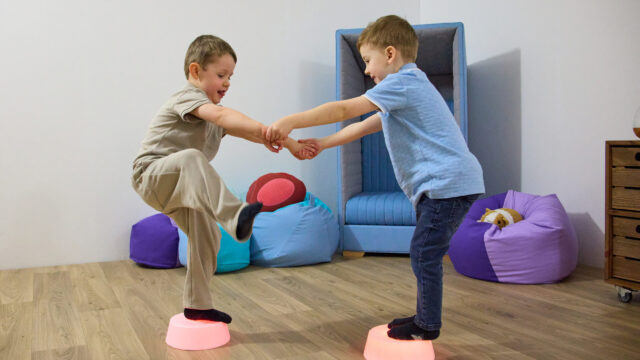
For busy teachers, having a bank of easy gymnastics ideas can make lesson planning much simpler. Below are some lesson time ideas:
- Warm-up games such as “follow the leader” or movement-based tag games can quickly engage pupils while reinforcing key skills.
- Skill stations allow pupils to rotate around different activities, focusing on specific movements like balancing, rolling, or jumping.
- Circuit-based lessons are another effective option, combining multiple skills in a structured and manageable format.
Common Challenges When Teaching PE Gymnastics (and How to Solve Them)
Teaching PE gymnastics can come with its challenges, but most can be managed with the right strategies.
Confidence is a common issue, both for teachers and pupils. Start simple, use clear demonstrations, and build gradually. Mixed ability groups also require differentiation, making varied levels of challenge within the same activity important. This will mean all pupils can participate meaningfully and allow confidence to improve.
Behaviour management may also be a challenge, but can be improved by keeping pupils engaged with varied activities and clear expectations. Using creative planning such as circuits or focusing on floor work can both help with keeping pupils engaged but also tackle any potential issues with limited space or equipment.
Example Gymnastics Lesson Structure
A clear structure can make gymnastics lesson ideas primary both effective and easy to deliver. The following is an example of a possible lesson structure:
- Start with a warm-up that raises heart rates and introduces basic movements.
- Move into skill development, focusing on a specific area such as balance or rolling.
- Follow this with practice and application, where pupils use the skill in sequences or activities.
- Finish with a cool down, helping pupils relax and reflect on their learning.
Conclusion
Gymnastics in primary schools is a fundamental part of delivering high-quality physical education. It supports not only physical development but also confidence, creativity, and teamwork. By starting simple and building progressively, teachers can create engaging and inclusive PE gymnastics lessons that work for all pupils. With the right gymnastics ideas and a focus on safety and enjoyment, gymnastics can become one of the most rewarding areas of the curriculum.
Ultimately, the goal is to give children the skills and confidence to move well, express themselves, and enjoy being active. These benefits will stay with them long beyond their primary school years. To make sure you have the right school gymnastics equipment, visit the TTS site.