



During Key Stage 3 (KS3), learners are developing not only their subject knowledge, but also their learning habits, confidence and independence that will support them throughout secondary school and beyond.
Every classroom is different and so are the young people in it. Some pupils learn through discussion, some need practical ‘hands-on’ opportunities, and some may benefit from visual prompts or the chance to work with others. By offering a variety of different learning strategies alongside engaging classroom resources, we can create inclusive learning environments that cater to different strengths, abilities and learning styles so that every learner feels involved and confident.
Why Student Engagement Matters in KS3
As we know, student engagement is much more than just simply keeping pupils ‘busy’ during a lesson. Engaged learners are curious, motivated and willing to contribute. As they question, explore and discover, they are building a stronger understanding as well as essential life and learning skills such as communication, resilience and critical thinking. Creating lessons that actively involve every learner can make a lasting difference to both attainment and wellbeing.
Supporting Participation and Motivation
Within our classrooms we want to create an environment where every learner wants, and is motivated, to participate. Through participation and engagement grows a deeper level of learning and understanding. Our young people become active participants in their own leaning rather than passive listeners.
Research shows us that when lessons involve questioning, discussion, practical activities and opportunities to apply knowledge, students are more likely to stay focussed and retain what they have learnt.
This also helps to build students’ confidence, as they start to find their voice within their learning, whilst developing their ability to collaborate and communicate. Important skills they will need far beyond school.
Creating an Engaging Learning Environment
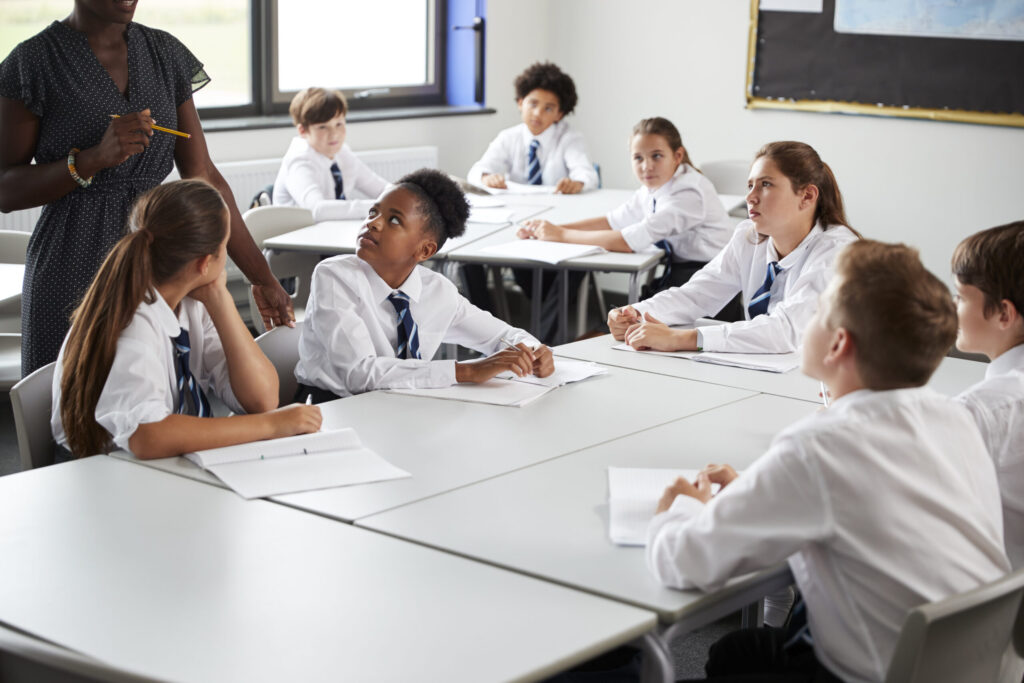
We all know that feeling when you walk into a classroom where pupils are truly engaged and wanting to learn. There is a buzz of excitement, curiosity and motivation. Students are thinking, questioning and collaborating and they are actively constructing knowledge by discussing and solving problems.
This creates an inclusive classroom where all learners feel they are supported and therefore want to learn. Using carefully planned resources and strategies may help to make complex concepts easier to understand, scaffold and break down learning into manageable steps, or allow students to test ideas, make predications and discover themselves. When we support learners in the way that they need, we see increased motivation, participation and we therefore maximise their learning time.

Hands-On Resources That Improve Engagement
Practical classroom resources continue to be some of the most effective tools for increasing engagement at KS3. Giving students something tangible to manipulate or investigate often helps make learning more memorable while encouraging discussion and collaboration. They can sometimes help students to ‘see’ more abstract ideas and lead to a few more of those “aha!” moments!
Active and Collaborative Learning Tools
Collaboration is one of the most effective ways to increase engagement, particularly when activities encourage every member of the group to contribute.
Try using mini whiteboards to record answers or working out. This can reduce the pressure on ‘getting things’ right and allow students to create pictorial representations of their learning. Whiteboards can also be used as a ‘show me’ activity with every student showing their answer at the same time, helping to give insight into understanding while encouraging participation from less confident, quieter learners.
Problem-solving cards, logic puzzles and group challenges also encourage mathematical reasoning. Rather than focusing solely on finding the correct answer, these activities promote discussion, resilience and strategic thinking as students work together to overcome increasingly complex problems.
Mathematics is an area that can particularly benefit from physical resources. It becomes increasingly abstract during KS3, so practical resources are especially valuable in helping to keep students’ engagement levels high. Maths manipulatives such as counters, algebra tiles and place value resources provide concrete representations of mathematical ideas. Whether introducing algebra, exploring fractions or demonstrating equations, these resources help bridge the gap between practical understanding and abstract thinking.
We know the positive impact of movement on engagement, so considering resources that encourage movement and active learning are important. We can find ways to get children up and moving, for example on a large world map to discover the world, on an orienteering adventure, a hopscotch of facts, or a challenge to programme a robot to travel around the human body to learn about blood flow.
When pupils can physically move, sort, or build their way to an answer, their confidence soars as well as engagement.
Creative and Practical Classroom Resources
Not all engagement looks like quiet focus. Sometimes, it is a a bustling classroom where students are designing, debating, or presenting. Here are some examples of strategies and resources which can inspire ‘creative and practical’ learning:
STEM investigation kits, science equipment and design materials all give pupils opportunities to experiment, test ideas and develop practical skills alongside theoretical knowledge.
Role-play activities, particularly in subjects such as English, history and modern foreign languages can be used to present arguments, act out historical events or simulate real-life situations.
Visual displays can be another valuable learning resource. Interactive classroom displays that students contribute to throughout a topic encourage ownership of learning and provide useful reference points during independent work.
Collaborative tasks, whether creating posters, designing presentations or completing investigation projects, encourage discussion while helping students learn from one another’s ideas and perspectives.
Digital Resources for Engaging KS3 Learners
Digital technology has become an essential part of many KS3 classrooms, offering teachers flexible ways to present information, assess understanding and encourage participation. Technology resources can provide additional opportunities for interaction, collaboration and personalised learning. The goal is not to replace hands-on resources but to complement them.
Technology Resources for the Classroom
Technology can be used in many different ways, not just to engage and motivate learners, but also to scaffold and support to create a truly inclusive experience.
Here are a few examples of different types of technology you might consider:
Visualisers are a firm favourite of many teachers. They can be used in so many different ways such as for modelling examples, demonstrating practical techniques and sharing students work instantly with the whole class.
Interactive quizzes and online assessment platforms can be used to help students check their understanding, monitor their own progress and provide immediate feedback. They introduce a healthy sense of challenge and competition.
Video-based learning resources can be helpful for introducing new topics in an engaging way, or reinforcing difficult to demonstrate concepts. Short, carefully selected clips can provide real-world context, stimulate discussion and help visual learners connect with new ideas.
Programmable robots being used across the curriculum can also be very motivating for some learners. For example, you could use a robot, such as Loti-Bot, to extend learning about Geometry and program the robot to create shapes with different angles and properties.
Recordable technology such as microphones, cameras and recordable devices could be used as an engaging, alternative way to record learning. Students could create podcasts or videos to capture and showcase their learning. This is also beneficial to help scaffold and support some children to share their learning.

Strategies for Increasing Engagement Across KS3 Subjects
While every subject may have its own specific teaching approaches, the principles of student engagement often remain consistent. Students are more likely to participate when lessons are relevant, interactive and offer opportunities to contribute in different ways. By combining practical resources with thoughtful teaching strategies, we create learning experiences that motivate pupils across the curriculum.
Encouraging Collaboration and Communication
Collaboration gives students the opportunity to learn from and with each other while developing essential communication and teamwork skills. Students learn to explain their thinking, challenge ideas respectfully and solve problems together.
Group projects are particularly effective because they allow students to take ownership of different aspects of a task. Whether researching a geographical issue, designing a science investigation or creating a presentation in English, collaborative projects position students as researchers of knowledge.
Working in pairs is also important and can be supportive for those students who need to learn through discussion but without the pressure of speaking in front of a larger group or the whole class. Think-pair-share tasks, peer reviews and partner quizzes encourage every student to contribute and gives quieter learners the confidence to share their ideas before speaking to a larger audience.
Using Games and Challenges
Introducing an element of play, fun and challenge into learning can also have a positive impact on motivation.
Quiz-based learning, whether using digital platforms or printed quiz cards, provides instant feedback while encouraging healthy competition. A carefully created quiz can be particularly useful for retrieval practice, revision and checking understanding at the end of a lesson.
Timed challenges to solve a problem or complete a task can help to encourage concentration, set boundaries students a set amount of time to solve a problem, complete a practical task or identify errors encourages concentration and develops resilience when faced with more challenging activities.
Taking inspiration from the wider world, escape room-style learning tasks can also be a great possibility. This combines subject knowledge with teamwork and problem-solving, requiring students to complete a series of linked challenges to achieve a shared goal. They encourage perseverance, communication and critical thinking while making learning feel exciting and purposeful.
Supporting Inclusive Engagement
One of the greatest challenges in any KS3 classroom is ensuring that every learner feels able to participate.
Providing a range of different ways to access learning can help to improve engagement. Visual organisers, practical equipment, verbal discussion and written tasks all offer different entry points into the same lesson, allowing students to demonstrate understanding in ways that suit them best.
Low-pressure participation strategies are also valuable. Mini whiteboards, anonymous response cards and paired discussions all allow more reluctant learners to share their thinking without the anxiety of answering in front of the entire class.
For pupils with SEND, carefully selected classroom resources matched to their individual needs can reduce barriers to learning. Every learner is different, but this may be visual prompts, tactile resources, structured routines or assistive technologies. When their needs are met and supported, children calm and regulate, and therefore are better prepared to access the learning.

Choosing the Right KS3 Resources for Your Classroom
With so many classroom resources available, it can be difficult to know where to invest. The most effective classroom tools are those that fit naturally into everyday teaching, encourage active participation and can be adapted across different topics and year groups.
Identifying Classroom Needs
It is helpful to start by reflecting on the needs of both your students and your curriculum.
Learning Objectives: Consider the learning objectives you want to achieve. Are students struggling to visualise mathematical concepts? Would practical lessons benefit from additional equipment? Could collaborative resources improve classroom discussion?
Balance practical and digital tools: Technology offers excellent opportunities for assessment, modelling and independent learning, while hands-on resources encourage exploration, collaboration and deeper understanding.
Needs of the learners: reflect on the needs of the individual learners in your classes and their differing abilities. Explore resources that will support, scaffold and extend learning in different ways. Also consider resources that support students to access the curriculum, such as calming and regulating resources, or recordable devices to capture learning in different ways.
Building Your Own Flexible Resource Toolkit
Think of your resource collection as a toolkit, a collection of resources that are there and ready for you as and when needed. You might want to consider exploring both ‘classroom essentials’ such as a class set of whiteboards or a set of recordable microphones, as well as subject specific resources, such as manipulatives, graphic organisers, discussion prompts, or challenge cards.
A top tip – keep your resources organised in boxes or wallets so that you can put your hand to them easily whenever you need them.
Start Preparing to Engage Students
When pupils are actively involved in lessons, they are more likely to develop confidence, retain knowledge and enjoy the learning process. During KS3, these positive experiences help establish the skills and positive attitudes that will support them as they move through school.
And, most importantly, engaging classrooms are inclusive classrooms. By offering a variety of practical, visual and interactive resources, we create learning environments where every student is given the opportunity to contribute.