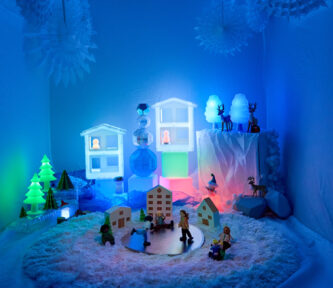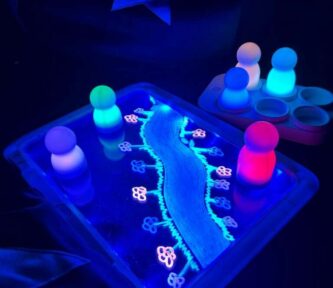


Light has a unique way of capturing children’s attention. When combined with hands-on resources, it becomes a powerful tool for engagement, exploration, and meaningful learning. Glow Sequencing Cubes are designed to harness this curiosity, offering a sensory-rich experience that supports key areas of development in early years settings.
In this blog, we explore how Glow Sequencing Cubes can be used to promote learning through light, with practical activity ideas that link directly to early years outcomes.
Why Use Glow Sequencing Cubes in Early Years?
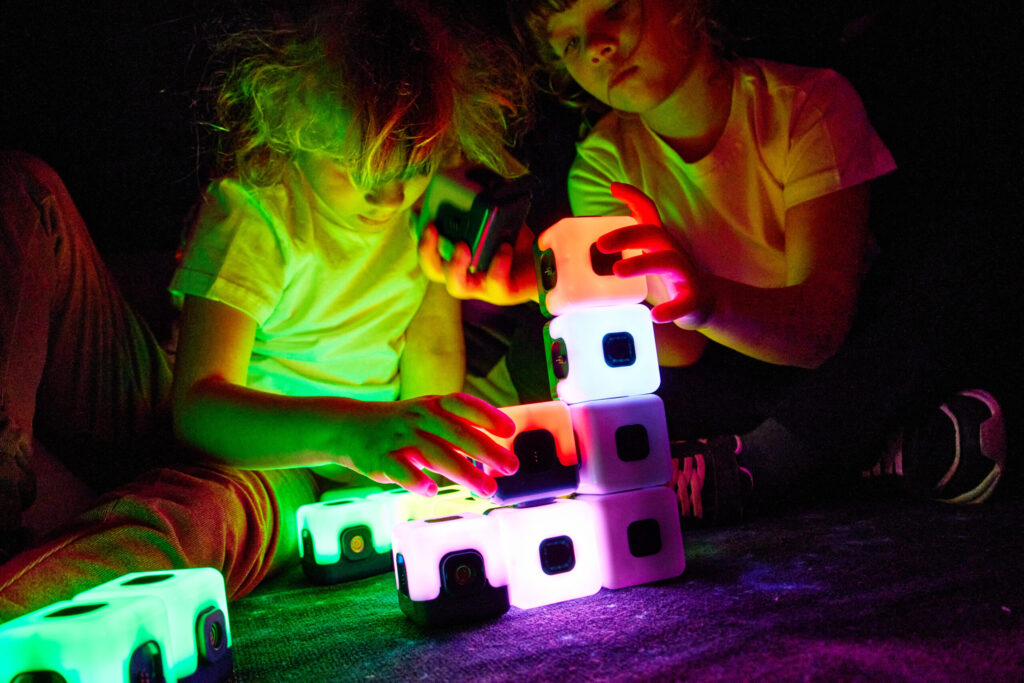
Glow Sequencing Cubes provide a multi-sensory learning experience that encourages children to explore colour, pattern, and cause and effect in an engaging way. Their illuminated design naturally draws focus, making them particularly effective for sustaining attention and supporting children who benefit from visual and sensory input.
Using glow resources helps to:
- Stimulate curiosity and exploration
- Encourage sustained engagement
- Support visual learning and focus
- Create calming, sensory-rich environments
Glow Sequencing Cubes are also highly versatile, making them suitable for both child-led play and adult-guided activities.
Developing Mathematical Skills Through Light Play
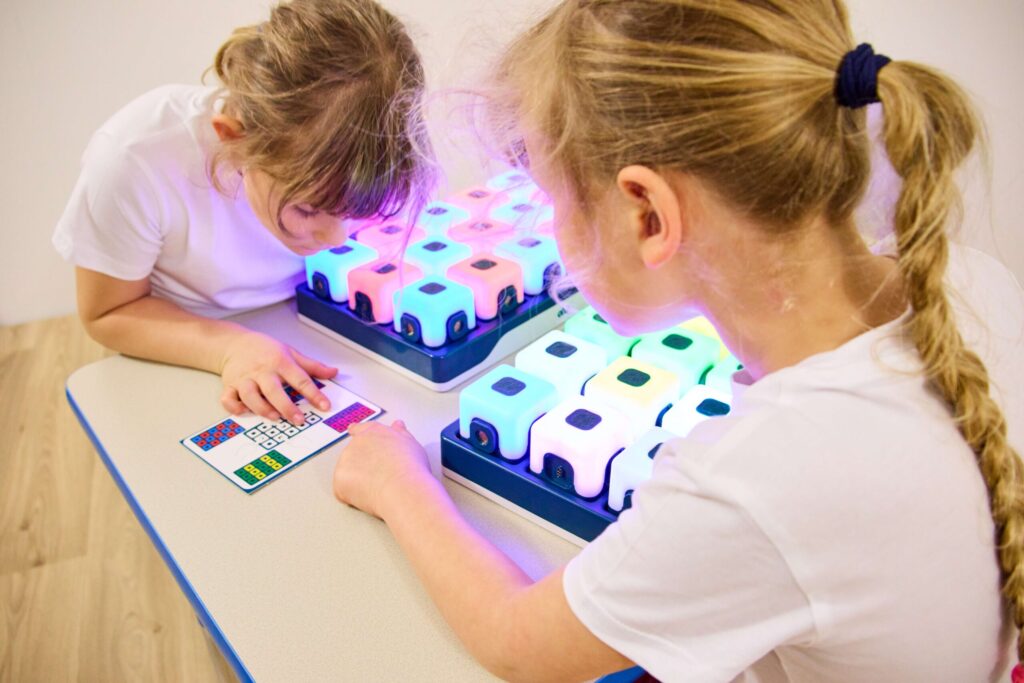
Glow Sequencing Cubes are an ideal STEAM resource as they can introduce early mathematical concepts in a practical and engaging way.
Children can explore:
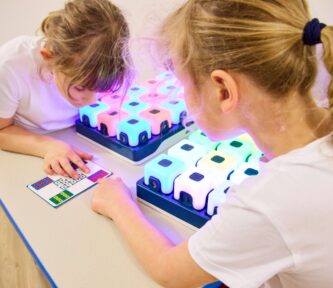
- Sequencing and patterns by arranging colours in repeating or growing patterns
- Counting and quantity through stacking and grouping cubes
- Comparing size and height when building structures
Practitioners can extend learning by asking open-ended questions such as:
- “What comes next in your pattern?”
- “Can you make your tower taller?”
- “How many cubes have you used?”
These interactions help to build confidence in early maths while keeping learning playful and accessible.
Encouraging Communication and Language Development
Learning through light creates natural opportunities for conversation. As children interact with Glow Sequencing Cubes, they begin to describe what they see, do, and think.
Key vocabulary can include:
- Colours and descriptive language (bright, glowing, dark, light)
- Positional language (on top, next to, underneath)
- Action words (build, stack, change, connect)
Encouraging children to explain their ideas or describe their creations supports both expressive language and critical thinking.
Supporting Understanding of the World
Glow Sequencing Cubes provide a simple yet effective way to introduce early scientific concepts, particularly around light and cause and effect.
Children can investigate:
- How light behaves in different environments (dark spaces vs natural light)
- What happens when cubes are covered or combined
- How their actions influence outcomes
This type of exploratory play supports curiosity and helps children begin to make sense of the world around them.
Inspiring Imaginative and Creative Play
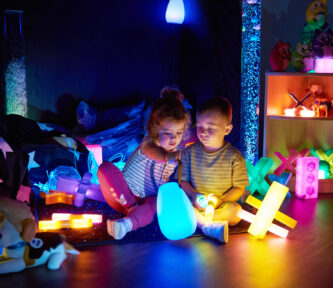
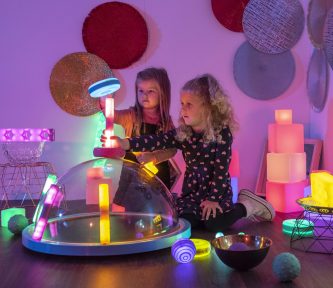
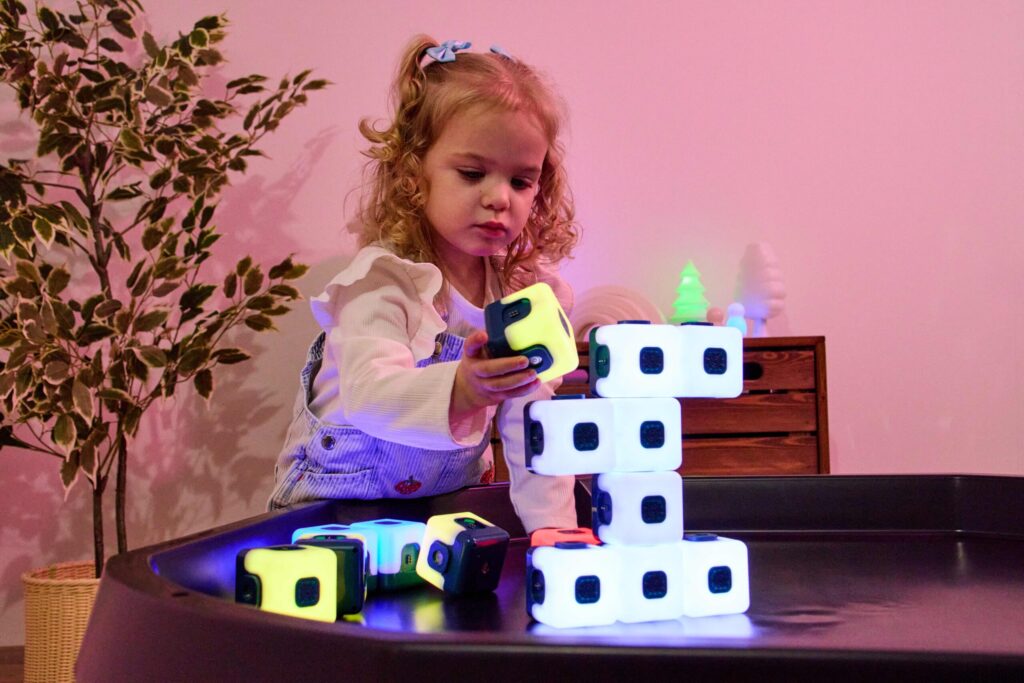
The open-ended nature of Glow Sequencing Cubes makes them a powerful resource for imaginative play. In a dimmed environment, they can transform into anything children imagine – from glowing towers and pathways to magical worlds.
Practitioners can support creativity by:
- Providing prompts or story starters
- Encouraging role play and storytelling
- Combining cubes with other resources
This not only develops imagination but also strengthens narrative skills and collaborative play.
Creating Calm and Sensory Learning Environments
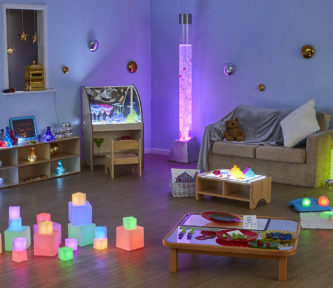
Glow Sequencing Cubes are particularly effective in sensory spaces. Their soft illumination can help to create a calming atmosphere, supporting children who may feel overwhelmed or need a quieter moment.
They can be used to:
- Create a cosy, calming corner
- Support mindfulness and quiet play
- Encourage focus and self-regulation
Learning through light is not always about activity – it can also be about providing opportunities for calm, reflection, and emotional development.
Differentiation and Progression
Glow Sequencing Cubes can be easily adapted to suit different stages of development.
For younger children:
- Focus on simple stacking and colour recognition
- Explore cause and effect through interaction
For more confident learners:
- Introduce complex patterns and sequencing challenges
- Encourage problem-solving and explanation of thinking
This flexibility makes them a valuable resource across a wide range of early years settings.
Conclusion: Unlock Learning Through Light
Glow Sequencing Cubes offer far more than visual appeal. They are a versatile, engaging resource that supports learning across mathematics, language, understanding the world, and creative development.
By incorporating light into play, practitioners can create meaningful learning experiences that capture attention, inspire curiosity, and support holistic development.
For early years environments looking to enhance engagement and promote learning through light, Glow Sequencing Cubes are a simple yet highly effective solution.