


This article was written by Alexandra Chiorando early years consultant and trainer at Marmalade Early Years.
Whenever I’m working with an early years setting on inclusion, one of the first things I like to do is watch what happens throughout the day. It’s amazing what you notice when you look at the environment through the eyes of the children. You might see a child who struggles whenever the group gathers on the carpet, another who becomes distressed during transitions or someone who spends much of the morning moving around the room, unable to settle into play.
Practitioners often know these children incredibly well and have already tried lots of approaches. Sometimes it helps to look at things from a slightly different perspective and consider what might be making everyday experiences difficult. With the introduction of the Inclusive Early Years Fund, settings have an opportunity to make some of those changes. The challenge is deciding where the money will make the biggest difference, particularly when there are so many resources to choose from.
What Does the New Funding Mean For Your Setting?
The Department for Education introduced the £47 million Inclusive Early Years Fund (IEYF) for 2026–27 to help early years providers in England strengthen inclusive practice for children with special educational needs and disabilities (SEND).
Distributed through local authorities to eligible providers delivering government-funded early years entitlements, the fund supports improvements across whole settings rather than relying solely on applications linked to individual children. Local authorities determine allocations within national requirements. The DfE recommends payments of around £1,000 per setting to make the funding meaningful, although this isn’t guaranteed. Smaller settings and childminders may not receive a direct allocation, but local authorities are expected to consider how they can access wider inclusion support.
The fund is additional to existing arrangements, including the Special Educational Needs Inclusion Fund (SENIF) and Disability Access Fund (DAF). It can support staff development, specialist advice, environmental adaptations and appropriate resources, provided spending contributes to SEND inclusion. Although the national allocation formula uses information about three- and four-year-olds, improvements can benefit babies and toddlers too.

Before You Buy, Take a Closer Look
Before rushing to spend inclusion funding, I’d encourage practitioners to spend time observing children. We can all get excited about new resources, but the starting point should be understanding the barriers children might be experiencing.
Look closely at different parts of the day. Are there times when children seem uncomfortable, frustrated or overwhelmed? Is someone struggling during group times or becoming distressed during transitions? What might their behaviour be communicating? Are they seeking movement, finding the environment too noisy or struggling to understand what’s expected?
I encourage practitioners to be curious about behaviour rather than immediately trying to change it. A child who repeatedly gets up during group time might need movement, find sitting uncomfortable or be struggling with an experience that doesn’t meet their developmental needs. Understanding what might be happening helps us support children to feel comfortable, regulated and able to participate.
It’s equally important to notice what children aren’t doing. Perhaps a child with a physical disability rarely accesses the water area. We might assume they aren’t interested, but can they reach the tray or move comfortably around it? Introducing a lower or height-adjustable water tray could transform that child’s opportunities to explore, play and interact with friends.
The same thinking applies to sand trays, creative areas and outdoor equipment. Sometimes we need to buy something, while other times repositioning furniture or changing a routine makes all the difference. Listening to children, families and other professionals helps us make those decisions thoughtfully. Is a child choosing not to join in, or is our provision preventing them? That question can change our plans.
The Dropped Kerb Approach to Inclusion
A good friend and former colleague of mine, who now works as a Local Authority Early Years SEND Advisor, often talks about the ‘dropped kerb approach’ to inclusion. It’s a simple but powerful way of thinking about how we can make our environments more accessible.
Dropped kerbs help wheelchair users navigate pavements, but they’re also useful for parents pushing prams, people pulling suitcases or children riding scooters. An adjustment designed to remove a barrier for one group ends up benefiting many others.
I’ve recently been working with a nursery to develop its approach to inclusion. The team has purchased a peanut ball, wobble stools, a wobble cushion, stretchy resistance bands and weighted lap toys. Some were chosen for a child who needed additional sensory input during small-group times, but the team has also introduced the resources to all the children, explaining what they’re for, how to use them and why different people might need different things.
A peanut ball might support a child who benefits from movement and proprioceptive input, while also being useful for supervised balance activities. A wobble cushion might make sitting more comfortable for one child, while stretchy bands offer playful pulling and resistance experiences for others.
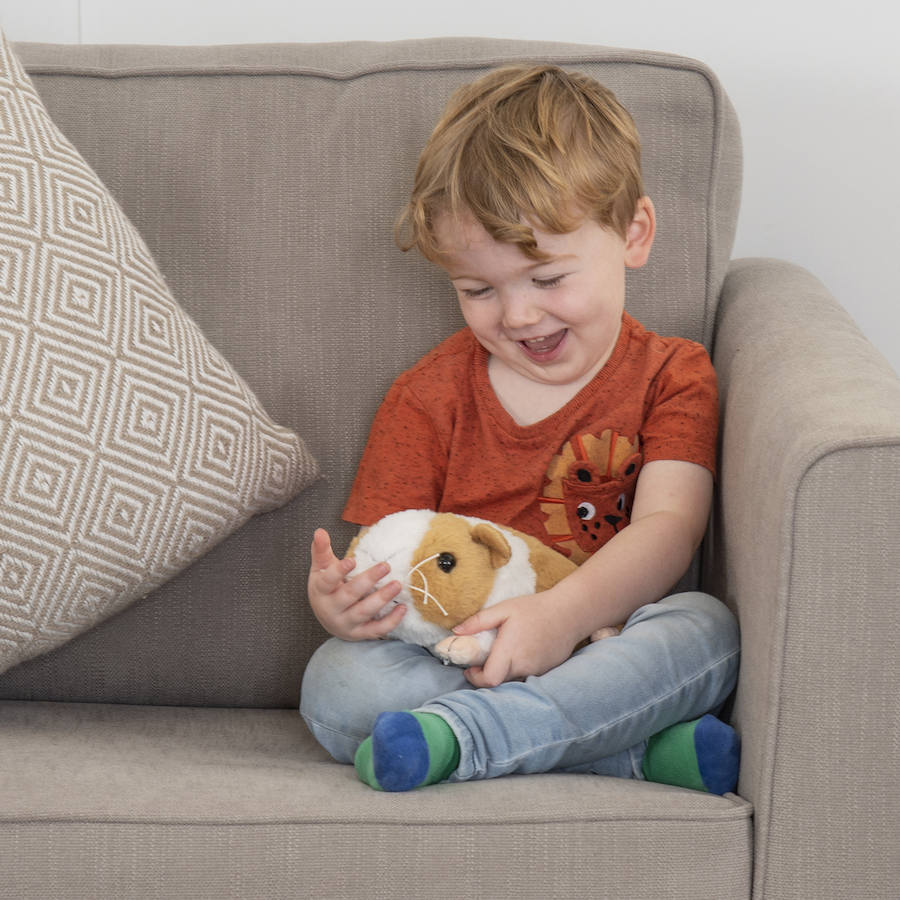
The TTS Vibrating Weighted Guinea Pig is another example. A child who benefits from gentle deep pressure might find its weight comforting, while another who’s anxious about separation could enjoy the soft fur and purring-like vibration of an animal on their lap (weighted equipment requires consideration of individual needs, age suitability and safe, supervised use).
A TTS Talking-Point button might support a child developing speech, but it could also help a child learning English as an additional language or someone who wants their voice heard but struggles to speak in front of others. That’s the dropped kerb approach in practice: one thoughtfully chosen resource opening up different opportunities.
‘But Won’t They All Want One?’
One of the most common responses I hear when introducing flexible seating or sensory resources is, ‘But all the children will want one! It’ll be chaos!’
Initially they probably will want a go. Of course they will, because they’re curious. From years of experience, though, that excitement usually settles when adults explain what the resources do and help children understand that different people need different things.
I genuinely believe young children are inclusive by design. They’re often more accepting of different needs than many adults I know. I’ve seen children notice a friend becoming a bit fizzy and suggest, ‘Come and have a bounce on the yoga ball, it’ll calm you down.’ Those are some of the moments I’m most proud of as an educator.
Children are beginning to understand themselves and support each other without making anyone feel singled out. Adults still need to model this understanding, respect children’s preferences and ensure resources are used safely. There is no expectation that a child should explain a diagnosis or justify using something that helps them. What matters is building a culture where children can ask for support and where different ways of participating feel completely ordinary.
Finding What Helps Children Feel Regulated
Children respond to sensory information differently. Some seek movement, pressure or tactile experiences, while others find sounds, textures, lights or busy environments overwhelming. Whenever I introduce sensory resources during training, someone usually says, ‘Oh, I need one of those for myself!’ Others immediately identify children in their setting who might benefit. These conversations remind us that everyone has sensory preferences, even if our needs differ.
Flexible seating is a good example. The TTS Ricochet Wobble Stool or Bouncyband Wobble Seat may help a child who needs movement while concentrating, while another might prefer a cushion or lying on their tummy during a story. We can become so focused on how children are sitting that we overlook whether they’re actually listening and participating.
I see this at home too. My 11-year-old son has ADHD and is hypermobile, and he uses a Stapelstein wobble stool in class. Being able to move gently while sitting provides the sensory input he needs to focus and maintain concentration. Sitting completely still isn’t always necessary for learning.
Other possibilities include resistance bands, a body sock, deep pressure input and carefully selected weighted lap toys or blankets. Weighted or compression equipment isn’t suitable for everyone and requires individual assessment, appropriate professional guidance and close supervision. Sometimes the simplest activities do the job: carrying baskets, pushing a trolley, moving blocks, kneading dough or digging all provide movement and resistance during everyday play. Observation tells us what actually helps each child rather than assuming the same thing will work for everyone.

Moving, Listening and Learning Together
Large shared resources such as a giant stretchy band or parachute are wonderful for helping children with different needs join the same experience. The TTS Giant Elasticated Co-Op Band can be used for supervised movement, gently stretching and releasing together or moving in time to music. One child might enjoy the resistance while another develops coordination, listening skills or confidence within a group.
With a parachute, children can lift the fabric, make ripples or work together to keep a soft ball moving. A child who finds grasping or standing difficult might participate with adapted positioning and support, while another watches the colours rise and fall before choosing to join in. They don’t all need to perform the same action to belong to the experience.
Simple sensory circuits are useful too. Stepping stones, balance cushions, tunnels, beanbags and opportunities to push or carry suitable objects can form a short sequence of movement and coordination activities. There’s no need for an expensive sensory room, and the activities can be adapted according to children’s responses.
I also use wooden claves in training to demonstrate how easily we can support attention and listening. Children might copy two taps, take turns creating a rhythm or listen for changes in speed. One child can respond to a simple pattern while another leads the group with something more complex. These playful experiences develop listening, memory, turn-taking and connection. They can also be brilliant for children who are hesitant to join a group: an adult can begin by tapping a rhythm with one child, then invite a friend to join when they’re ready. A shared beat can create a lovely feeling of togetherness without putting anyone on the spot. Softer sounds or a smaller group can make the activity more comfortable for children sensitive to noise.
Every Child Deserves to Have Their Voice Heard
For children with speech, language and communication needs, everyday experiences can present barriers that aren’t always immediately obvious. Imagine a child who understands what’s happening around them but struggles to find the words to join in, or a child who relies on gestures and facial expressions because spoken communication is still developing. Some children may have difficulties understanding language, processing instructions or communicating their needs, while others may use very little spoken language or communicate in different ways.
This is where inclusion funding can help us provide different ways for children to understand, express themselves and participate. Photographs, objects of reference, visual choice boards and communication aids can give children greater independence and reduce the frustration that sometimes comes from being unable to make themselves understood.
Recordable resources such as TTS Talking-Point Buttons can be particularly useful. Imagine a child with limited spoken language taking part in a familiar story by pressing a button to contribute a repeated phrase or using a recorded message to make a choice during play. The TTS Chatter Board Pro offers further opportunities to record familiar vocabulary, messages and sounds, which can be personalised according to children’s communication needs and interests.
For children who find processing spoken information difficult, having the opportunity to listen again, alongside photographs or symbols, can support understanding. Children who are developing their speech might also enjoy recording and listening to familiar words and phrases through playful activities, while those who are less confident communicating in a group can record their ideas and share them when they feel ready.
What matters is that children have meaningful opportunities to communicate in ways that work for them. A child who cannot yet express an idea verbally may still have plenty to contribute, and a carefully chosen resource can help them become a more active participant in conversations, stories and play alongside their friends.
Making Everyday Routines Easier
Transitions can be difficult for children who find it hard to stop playing, process instructions or predict what happens next. A now-and-next board showing washing hands followed by snack time can make the immediate routine clearer, while a visual timetable helps children anticipate the day.
You can make these simply using photographs, laminated pictures and Velcro. The TTS Recordable Talking Panel also combines pictures with recorded messages. Whatever you use, adults need to introduce the supports, refer to them consistently and help children understand changes. A timetable introduced for one child may soon become useful to everyone.
Somewhere to Escape the Hustle and Bustle
Early years environments are full of conversation, movement and noise. Some children find this exciting, while others struggle to filter out background information. A child may cover their ears, withdraw or become distressed when everything feels too much. Somewhere quieter can reduce those sensory demands and offer an opportunity to settle with a familiar adult if needed. Children shouldn’t have to reach breaking point before accessing that space.
A sensory tent can provide a more enclosed option, while the TTS Play Pod Den offers a sheltered area for quieter play, books or one-to-one interaction. A cosy corner with cushions and thoughtful furniture placement can work equally well for smaller settings and childminders. These spaces need to be safely supervised and should never be used as punishment.
Again, a quiet place introduced for a child with sensory differences may also help a tired toddler, someone struggling with separation or a child who simply wants to read without interruptions.

Don’t Wait For a Diagnosis
We shouldn’t be waiting for a child to receive a diagnosis before putting support in place. Waiting times for assessments can be lengthy, but children still need to feel comfortable, included and able to participate in everyday experiences while those processes are taking place.
If a child is regularly struggling with transitions, finding group times overwhelming or having difficulty communicating their needs, we can start making adjustments straight away. A visual timetable, a different seating option or access to a quieter space might make a real difference, regardless of whether that child has an identified SEND.
This is one of the real opportunities offered by the Inclusive Early Years Fund. Settings can be proactive, using their observations and knowledge of children to identify emerging needs and remove barriers before difficulties become more significant. We don’t need to know exactly why a child is struggling to recognise that something in their environment or daily experiences needs to change.
The Adults Make the Difference
Some of the most valuable investments are in practitioners’ understanding. IEYF can support training, SENCO coaching, specialist advice and time to plan improvements. I’ve visited settings where wonderful resources sit unused in cupboards because adults aren’t sure what to do with them. A wobble stool, visual timetable or quiet den only becomes useful when practitioners understand why it’s there and how to introduce it sensitively.
Before purchasing, consider what you already have and how flexibly it can be used. Childminders might get more benefit from a portable visual board and a few versatile resources than from equipment that needs permanent space. Keep evidence of expenditure, follow local authority requirements and be able to explain how spending strengthens SEND inclusion. The 2026–27 funding must be spent by 31 March 2027.
Just as importantly, revisit your observations. Is the child now accessing the water tray? Are transitions easier? Are more children joining in and expressing their needs? Those changes are what tell us whether an investment has made a difference. I would much rather see a setting buy a handful of carefully chosen resources and use them brilliantly than purchase a cupboard full of things without a clear plan for how they will benefit the children.

Imagine the Ripple Effect
Returning to the nursery I’ve been supporting, what encourages me most is that the team hasn’t simply bought resources for individual children. They’ve helped everyone understand how and why to use them, building children’s awareness of their own needs and those of their friends.
The benefits have extended to the adults too. Through the training, practitioners have developed a better understanding of their own sensory needs and preferences, which has helped them recognise why different children might need different types of support. They’re also feeling more confident having conversations with families, sharing what they’ve observed and exploring strategies and resources that might help children feel more comfortable and regulated at home as well as in the setting.
I can’t help wondering about the wider impact of growing up in environments like these. Imagine children moving through school and into adulthood confident enough to recognise when they need a break, knowing what helps them feel comfortable and accepting that someone else might need something completely different. In the increasingly digital world they’re growing up in, with so many competing demands on attention, understanding our bodies, emotions and relationships matters enormously.
A wobble cushion, wooden claves or visual timetable might seem like a small investment, but the understanding and attitudes children develop around using these resources could stay with them for life. When I remember children offering a yoga ball to a friend who’s feeling a little fizzy, that’s exactly the kind of ripple effect I’d like to see.
References
Department for Education (2026). Inclusive Early Years Fund for 2026 to 2027: Conditions of grant and operational guidance for local authorities.
Department for Education (2026). Inclusive Early Years Fund: Best practice guidance for local authorities.
Department for Education (2026). Inclusive Early Years Fund for 2026 to 2027: Methodology.