

Children spent on average 19 minutes longer playing with glow construction resources compared with non-glow resources in a proof-of-concept study.
A pilot study by TTS and the Institute for the Science of Early Years and Youth (ISEY) has found that children spent significantly longer engaging with glow construction resources than non-glow alternatives, alongside increased signs of curiosity, shared attention and expressive communication.
About the Research
The research, conducted at the University of East London, explored how seven early years children interacted with glow and non-glow resources during free play.
Using observation and wearable technology, the study examined engagement, communication and responses during play. Rather than comparing which resources are “better”, the research focused on how children responded differently to each type.
The Findings
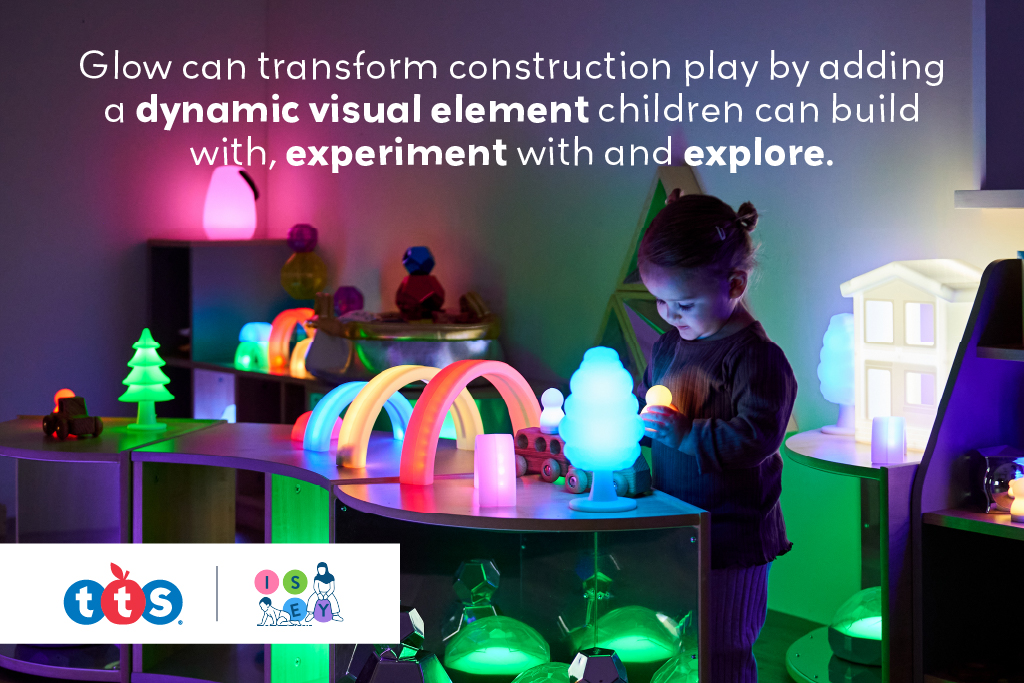
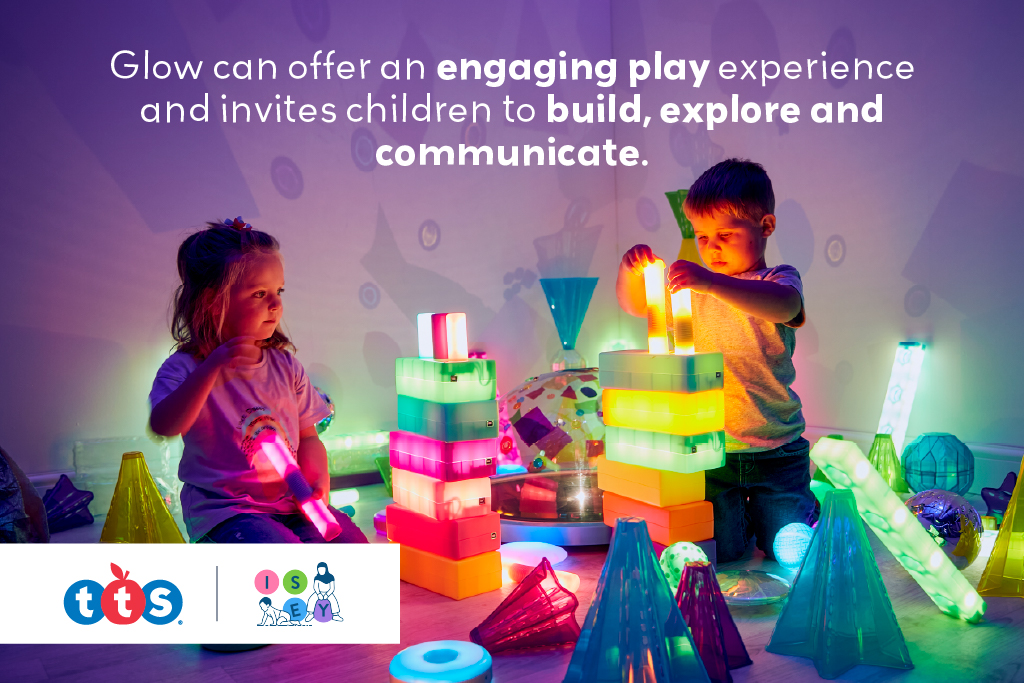
The clearest findings emerged around construction play. Children spent around 46 minutes with glow construction resources – such as arches, cylinders, crosses, and bricks – compared with 27 minutes with non-glow construction resources. They also sustained longer uninterrupted periods of construction play and returned to glow construction resources more frequently.
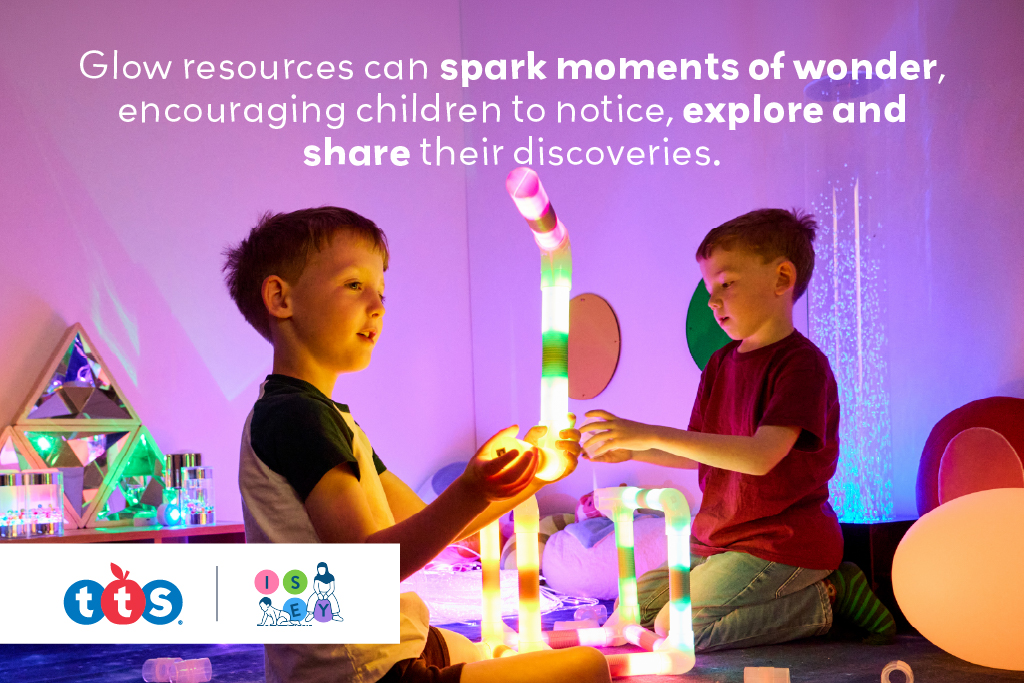
The research also revealed a difference in how children communicated during glow play. Children used words such as “look” and “wow” more frequently, alongside language relating to light and illumination. This suggests that glow can create immediate moments of curiosity, wonder and shared noticing, giving children something visually interesting to explore and talk about with others.
How the Research Will be Used
While this was a small exploratory study, the findings give TTS valuable insight into how glow resources can add another dimension to open-ended play.
The findings are informing TTS’s ongoing development of glow resources, including its new Glow Sequencing Cubes, which combine construction and sequencing play with light-based sensory exploration.
Joanne Hardy, Sales and Marketing Director at TTS, said: “Working with ISEY has given us valuable insight into how young children engage with glow resources and the research findings will inspire our future product development.”
Dr Gemma Goldenberg, Deputy Director, Institute for the Science of Early Years, University of East London
“These pilot findings give us an encouraging indication that glow resources can do more than simply capture children’s attention.
“In particular, we saw signs that they can support sustained construction play and prompt more moments of shared noticing, curiosity and expressive language. From an early years perspective, that suggests real potential when light is built into resources in a way that children can actively explore and manipulate.”