

Rachel Clarke is an experienced educational trainer and author with over 10 published titles including the popular Reading Detectives series. In this blog, she offers suggestions for how to create an engaging book corner to inspire young readers.
Audit the stock you have
Throw away old and tattered books. These are unlikely to be attractive to children and often mask the amount of quality books you have available for children to read. Then set to work curating a wide and varied collection of books covering fiction, non-fiction and poetry.
Within your collection, you’ll want to consider some golden oldies – books with well-loved characters or by well-known authors. You’ll also want books by new authors and illustrators. Keeping on top of what’s new can be challenging but there are helpful resources out there, including:
- Love Reading 4 Kids
- School Library Association
- School Reading List
- The Guardian’s Children’s book roundup
Ensure you have a range of picture books, illustrated fiction, comics and graphic novels. Even children in Upper Key Stage 2 benefit from reading picture books.
Books in series are essential. Lots of children (and particularly those who are reluctant to read) benefit from the safety net of returning to familiar characters and settings when beginning their reading journey.
Similarly, it’s worth creating collections of books on topics, themes or specific genre. Lots of children like to read books about topics of interest such as animal stories, books about their favourite sport or genre-specific books such as adventure stories, funny books or fantasy titles.
Suggested books to include in your book corner:
- Classic texts
- Recent publications
- Books featuring well-loved characters
- Books by well-known and favourite authors
- Picture books including wordless books, comics, graphic novels
- Book in series
- Collections of books on topics such as animal stories or football-themed books
- Fiction, covering a range of genre
- Non-fiction including biographies, information books on favourite topics and with links to the curriculum, popular titles such as the Guinness book of World Records
- Poetry books, both individual titles and anthologies
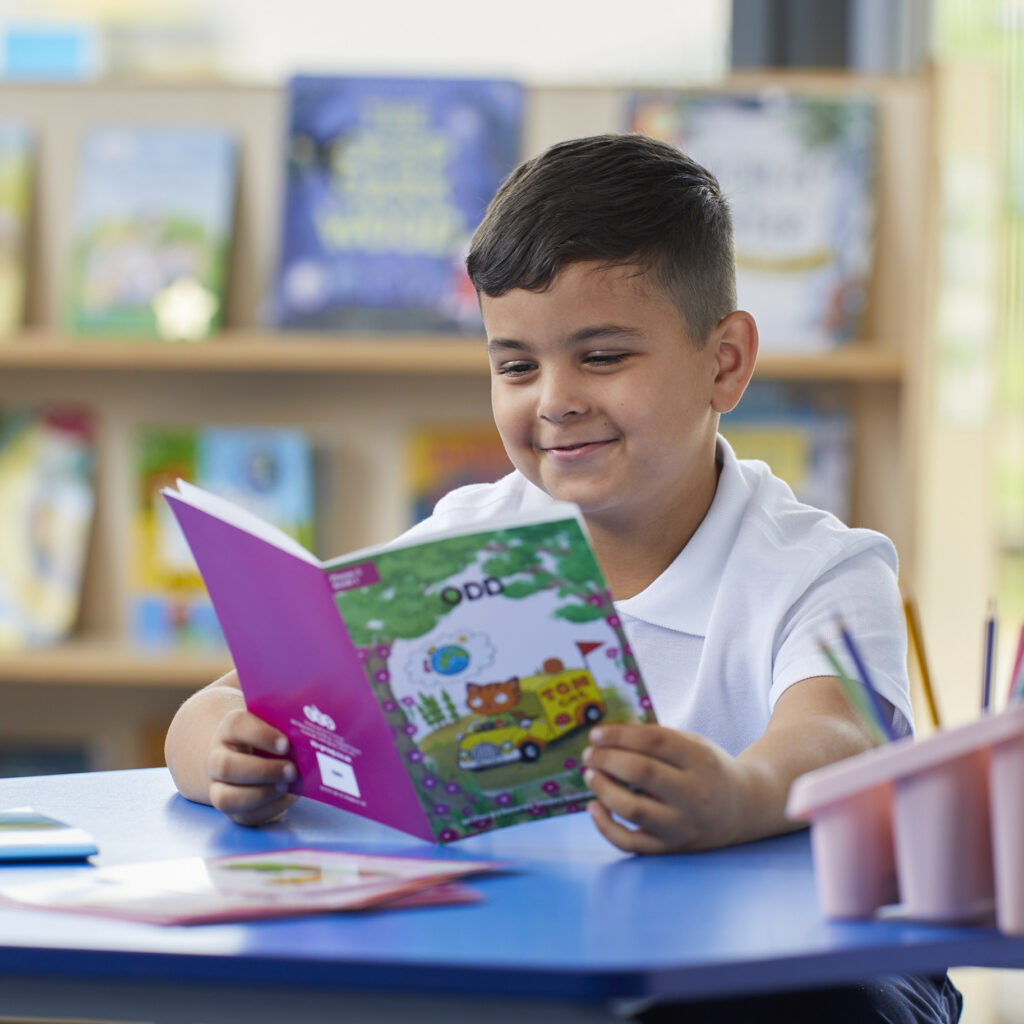
When setting up your book corner, think about how the books are displayed
Where you can, display the book’s face out. Bookshops do this a lot as it means the beautiful cover artwork can tempt readers more than if the book were displayed spine out.
Also, consider displaying some books on top of shelves and tables – again just as booksellers do in their shops.
It’s also worth thinking about organising books by genre or topic rather than by author name as you’d find in a library. If you label the shelf of the box where you store these books, it means children can locate what they’re looking for with relative ease.
You’ll know that feeling when you open a box of chocolates and feel over-faced by the selection on offer. Children can experience this when the book corner is over-stocked. It’s better to have fewer fantastic books than an extensive collection of poor books. This is why I suggest starting by auditing your stock and removing the books that don’t earn their place.
It’s also worth considering rotating you book corner stock to keep it fresh. This could be with a parallel class, by borrowing stock from the school library or by holding back some of your stock to refresh the library at regular points during the school year.
The books in your book corner need to have child appeal
Depending on the age of your class, there should be sufficient books at a level for the children to read independently (this is where refreshing the books can become particularly beneficial as you can bring in more challenging books as children’s reading skills increase over the year). Also bear in mind that younger children may not be able to decode all of the books in the book corner but if they are of an appropriate interest level, they will be able to enjoy sharing them.
Children love to read the books their teachers read aloud to them. Putting these books into your book corner once you’ve shared them is a great way to encourage reading for pleasure.
It’s also worth borrowing a few books from the class’ previous teacher for the first few weeks of the year. This way children can revisit books they know and love whilst they become familiar with your book corner stock.
To really make sure your book corner has child appeal, get the children involved in selecting the books. One way is to survey them to find out about their interests, hobbies, favourite authors and books. Another way is to take them to the school library and get them to choose the books for the classroom book corner.
An essential part of child appeal is having books that represent the children in the class. Legendary educator Rudine Sims Bishop referred to books as offering children ‘windows, mirrors and sliding glass doors’.
By this, she means that they offer them a window into new worlds, a reflection of their own world, and the chance to step through into the world of the book they’re reading. Making sure that your book corner stock represents the diversity of your class is essential.

Make sure your children get to use their book corner
Schedule time for them to browse, read and select books to take home. By adding short reviews such as the shelf edge reviews used in bookshops or bookmark reviews slipped inside books, the children in your class should be able to help each other make the most of your book corner.
To get started on your book corner, explore primary school reading books and discover suitable furniture to support young learners.