


Outdoor learning has become an essential part of provision in both early years and primary school settings, meaning schools are continuing to prioritise wellbeing, active learning and curriculum enrichment. So, investing in adaptable, long-lasting outdoor furniture is more important than ever. With budgets often stretched, educators need practical solutions that are versatile, durable, and able to support multiple learning objectives across the school year.
When carefully selected, outdoor furniture can transform playgrounds, gardens, and shared spaces into dynamic learning environments. From modular outdoor seating to sensory play tables and safe play equipment, the right pieces help create structured yet flexible outdoor learning zones that inspire creativity and collaboration.
This guide explores outdoor school furniture ideas for primary and early years settings, highlighting how thoughtful design supports engagement, well-being and curriculum delivery.
The Benefits of Outdoor Learning
Outdoor learning is far more than taking the classroom outside; it offers developmental, academic, and emotional benefits that are especially powerful in early years and primary education. Here are a few of the benefits you can expect from learning outdoors.
Enhanced Engagement
Children are naturally curious when learning outdoors, with open spaces encouraging exploration, questioning, and hands-on investigation. Whether practising phonics in a storytelling den or solving maths problems at an outdoor classroom seating area, pupils are often more motivated in fresh-air environments.
Outdoor furniture ideas in school settings should prioritise flexibility. Providing furniture that can be easily rearranged or repurposed supports different activities throughout the day, from small-group discussion to independent exploration.
Improved Wellbeing
Time spent outside positively impacts concentration, emotional regulation, and physical health. Access to outdoor learning zones allows pupils to move freely, collaborate socially, and benefit from natural light.
Providing comfortable outdoor classroom seating such as outdoor bean bags, collapsible outdoor chairs and picnic tables ensures children can focus while remaining relaxed. Well-designed playground furniture supports both structured lessons and informal social interaction, contributing to a positive school culture.
Types of Outdoor School Furniture
Selecting the right mix of furniture is key to building an adaptable outdoor space that can serve Early Years Foundation Stage and Key Stage 1 or 2 pupils alike. Here are a few furniture ideas to help inspire your outdoors learning environment.
Outdoor Seating: Chairs, Mats and Picnic Tables
Outdoor classroom seating is the foundation of any effective outdoor learning space. Collapsible outdoor chairs are particularly useful for schools needing flexible solutions. They are easy to store, quick to reposition, and ideal for group storytelling sessions or circle time.
Modular outdoor seating offers even greater adaptability. Units can be configured into curved discussion spaces, amphitheatre-style arrangements, or smaller breakout zones. This supports differentiated learning and allows teachers to respond to group size and activity type.
Picnic tables provide stable, structured workspaces for writing, art, and practical investigations. Combined with weather-resistant outdoor bean bags and mats, they create a welcoming and comfortable environment suitable for extended learning periods.
When selecting children’s outdoor furniture, durability and ease of cleaning should be prioritised to ensure longevity across seasons.
Storage Units, Sheds and Racks
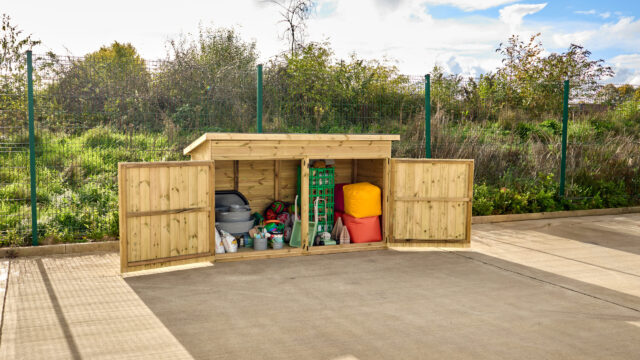
Effective outdoor learning depends on organisation. Purpose-built units, sheds, and storage racks help protect resources from weather damage while keeping materials easily accessible. Wellie racks are particularly valuable in early years settings, encouraging independence as children manage their own footwear. A designated clothing store or outdoor storage solution for waterproofs and spare garments supports smooth transitions between indoor and outdoor activities.
Using secure storage not only protects investment in resources but also ensures outdoor areas in primary school and early years settings remain tidy, safe, and inviting.
Nature-Inspired Furniture and Dens
Nature-inspired furniture supports imaginative play and encourages connection with the environment. Wooden dens, shelters and hideaway spaces provide opportunities for storytelling, role play and quiet reflection. These structures can become reading corners, maths investigation hubs, or creative writing spaces. Incorporating natural materials and earthy tones helps blend furniture into the outdoor landscape, reinforcing the calming benefits of nature-based learning.
Dens also support social development by offering smaller, contained environments where pupils feel secure and confident to express ideas.
Outdoor Kitchens and Sensory Spaces
Outdoor kitchens are increasingly popular in early years provision. They promote collaborative role play, language development, and problem-solving. Combined with sensory play tables, these spaces offer rich opportunities for exploratory learning.
Sensory play tables support activities involving sand, water, natural materials, and loose parts. They encourage experimentation and critical thinking while strengthening fine motor skills. For primary school pupils, these tables can be used for science investigations, measurement tasks, or creative art projects.
Purpose-built playground furniture designed for sensory exploration ensures safety while maintaining durability in varied weather conditions.
Boards, Chalkboards and Sandpits
Vertical surfaces such as outdoor chalkboards allow teachers to deliver whole-class instructions outside. They can also be used for phonics, spelling practice, maths challenges, or collaborative drawing.
Sandpits remain a valuable resource for both early years and lower primary pupils. They support sensory development, mathematical thinking, and imaginative play. When integrated into structured outdoor learning zones, sandpits become powerful teaching tools rather than purely recreational features.
Creating Creative Learning Environments
Well-designed outdoor spaces contribute to creative learning environments that extend curriculum delivery beyond classroom walls. By combining modular outdoor seating, safe play equipment and practical work surfaces, schools can create purposeful zones tailored to different subjects. For example, an outdoor reading corner with collapsible outdoor chairs and weatherproof storage can support literacy interventions. A science exploration area with sensory play tables and investigation trays encourages enquiry-based learning.
Creative learning environments are most effective when furniture supports movement and adaptability. Lightweight yet durable furniture allows staff to reconfigure spaces quickly, responding to changing learning objectives throughout the week.
Sensory Play Tables and Experiential Learning
Sensory play tables deserve special consideration within outdoor school furniture ideas for primary and early years. These versatile units encourage multi-sensory exploration, particularly beneficial for younger learners and pupils with additional needs.
In early years settings, sensory tables promote language development and social interaction as children describe textures, quantities, and changes. In primary classrooms, they can be used for geography mapping activities, science experiments, or measuring tasks.
Choosing robust materials ensures these tables withstand regular use and changing weather conditions, making them a long-term investment.
Safe Play Equipment and Structured Exploration
Safety remains a priority in any outdoor provision, making it vital that safe play equipment meets recognised standards while encouraging challenge and exploration. Balancing safety with stimulation ensures children can take managed risks in a controlled environment.
Climbing structures, balance beams, and investigative equipment can be integrated alongside seating areas to create well-rounded playground furniture layouts. These elements support physical development while complementing academic learning.
Careful placement of balancing toys and equipment ensures clear sightlines for supervision and smooth transitions between active play and focused learning.
Designing Outdoor Learning Zones
Organising furniture into defined outdoor learning zones supports clarity and structure. Rather than treating the playground as a single open space, dividing it into themed areas maximises functionality. Having a literacy zone might include modular outdoor seating, chalkboards, and storage for books. A STEM zone could incorporate sensory play tables, measuring tools, and investigation trays. A social relaxation area may feature outdoor bean bags, and collapsible outdoor chairs arranged informally.
Outdoor learning zones encourage purposeful movement between activities while maintaining engagement. Clear zoning also supports behaviour management and inclusive practice.
Tips for Designing Your Outdoor Space
Thoughtful design ensures outdoor furniture supports both current and future needs. Begin by assessing how different year groups will use the space throughout the academic year. Consider circulation pathways, supervision requirements and storage access. Flexibility should remain central, with furniture that can be easily rearranged to allow staff to adapt layouts for seasonal changes or curriculum shifts. Investing in children’s outdoor furniture designed for multiple uses maximises value and extends longevity.
Consider Safety as a Priority
When selecting outdoor furniture, schools must prioritise safety certifications and material quality. Rounded edges, stable construction, and weather-resistant finishes help in reducing risk. Surfaces should be easy to clean and resistant to mould or water damage. Regular inspection and maintenance routines ensure equipment remains safe and inviting.
Integrating wellie racks and organised clothing storage prevents trip hazards and supports independence, particularly in early years environments.
Choose Durable Furniture
Durable furniture is essential for outdoor environments where exposure to rain, sunlight, and heavy use is inevitable. Materials such as treated timber, recycled plastic composites, and powder-coated metal provide resilience without compromising aesthetics.
Selecting high-quality playground furniture reduces replacement costs and ensures consistency across school years. Long-term durability supports sustainable budgeting while maintaining high standards of provision.
Foster Creativity in Outdoor Settings
Outdoor environments naturally inspire creativity. By incorporating nature-inspired furniture, sensory spaces and adaptable seating, primary schools encourage imaginative thinking and collaborative exploration. Children might transform a den into a storytelling theatre or use modular outdoor seating to stage presentations. Outdoor kitchens become hubs for role play and mathematical reasoning as pupils measure and mix ingredients.
The right outdoor furniture schools invest in does more than furnish a playground; it shapes experiences that nurture confidence, curiosity and independence.

Conclusion – Get Your Outdoor Setting Ready
Investing in robust and adaptable outdoor school furniture ideas for primary and early years settings is essential for creating inspiring learning environments. From collapsible outdoor chairs and modular outdoor seating to sensory play tables and safe play equipment, carefully selected pieces transform outdoor spaces into purposeful, engaging zones.
Durable furniture ensures long-term value while supporting creative learning environments that align with curriculum goals. Thoughtful design, safety considerations, and flexible layouts enable schools to maximise every square meter of outdoor provision.
Explore our full range of outdoor furniture for schools and discover practical, high-quality solutions designed to support learning beyond the classroom walls.